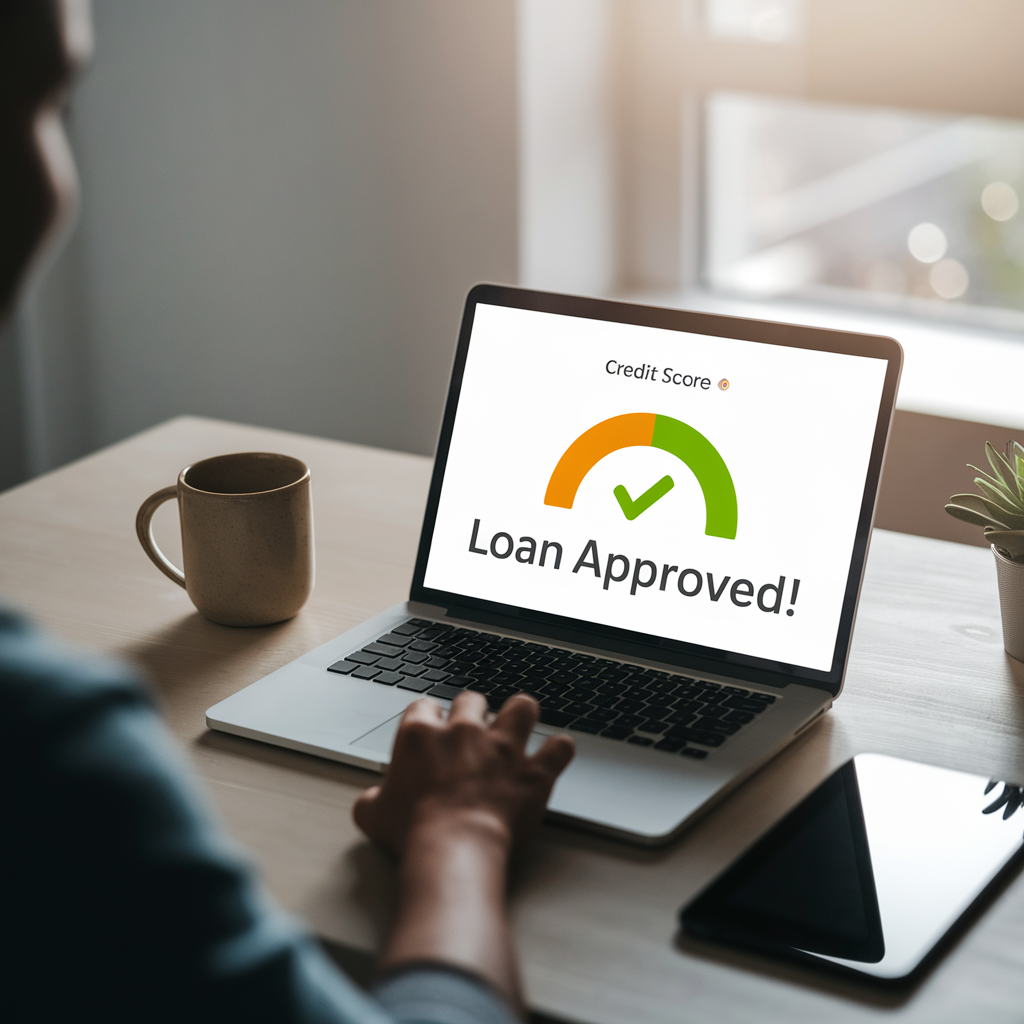
You’re standing in the checkout line at a big-box electronics store, staring at a $1,200 laptop you need for a new job that starts Monday. The cashier asks how you’re paying. You have two options lighting up your phone right now: a pre-approved personal loan offer sitting in your email, and a “Pay in 4” button blinking on the retailer’s app. You have about 90 seconds to decide — and neither option comes with a tutorial.
Most personal finance advice frames this as a question of convenience versus cost. But that’s the wrong frame entirely. The real question isn’t which option is cheaper on paper — it’s which one is cheaper for the way you actually behave with money. A 0% BNPL offer can end up costing you more than a 19% APR personal loan if you miss one payment or let it roll into a deferred interest trap. And a personal loan can wreck your budget if you borrow more than you need just because the lender offered it. The math matters, but so does your pattern.
1. How Each Product Actually Works — No Marketing Language
A personal loan gives you a lump sum upfront. You pay it back in fixed monthly installments over a set term — usually 12 to 60 months — at a fixed interest rate that gets disclosed before you sign. The APR on personal loans in the U.S. varies widely: borrowers with strong credit scores (think 720+) often land rates between 8% and 14%, while borrowers with scores in the low 600s can see rates climb above 25% or even 30%. The money hits your bank account, and you can use it for anything — not just the purchase that triggered the search.
Buy Now Pay Later is different by design. Most BNPL services split your purchase into four equal payments, with the first due at checkout and the rest spaced two weeks apart. The pitch is 0% interest, no credit check, instant approval. That part is often true — for the basic “Pay in 4” model. Where it gets complicated is with longer-term BNPL plans (6, 12, or 18 months), which sometimes carry deferred interest. That means if you don’t pay the full balance before the promotional period ends, you owe interest on the original balance — not just what’s left. It’s a structure that can blindside people who think they’re playing it safe.
2. The Real Cost Comparison on a $1,200 Purchase
Let’s use that laptop as the example. Here’s what the numbers actually look like:
- BNPL “Pay in 4”: Four payments of $300, every two weeks. No interest if you pay on time. Total cost: $1,200. But miss a payment? Late fees typically run $7 to $15 per occurrence depending on the provider — and some BNPL companies will pause your account, block future purchases, and report the delinquency to credit bureaus.
- BNPL 12-month plan (deferred interest): Monthly payments around $100. If you pay it off by month 12, you owe $1,200. If you have $47 left at month 12? Interest — sometimes at 26.99% — applies retroactively to the full original balance. That $47 could cost you $200+ in a single billing cycle.
- Personal loan at 14% APR over 12 months: Monthly payment around $107. Total paid: roughly $1,286. You know this going in. No surprise charges.
- Personal loan at 24% APR over 12 months: Monthly payment around $114. Total paid: roughly $1,370. More expensive — but still predictable.
The Consumer Financial Protection Bureau has flagged deferred interest structures as a significant source of consumer confusion — the gap between what people think they’re signing up for and what they actually owe can be hundreds of dollars on a single purchase. So if you’re comparing BNPL to a personal loan, make sure you’re comparing the right version of BNPL, not just the best-case scenario.
3. When BNPL Is Actually the Right Call
I’ll be direct: BNPL — specifically the Pay in 4 model — is a genuinely good tool under specific conditions. If the purchase is under $500, you have the cash flow to cover four payments without touching your emergency fund, and the provider doesn’t charge deferred interest, it’s nearly impossible to beat 0%. You’re essentially getting a six-week interest-free float on your money.
It also makes sense when you’re buying something from a retailer that has a return policy you trust. BNPL disputes can get messy — if the product is defective and the merchant drags their feet, you’re still on the hook for payments while the dispute gets sorted. But if you’re buying from a major national retailer with a solid return track record, that risk is lower.
Where BNPL starts to break down is when you’re stacking it. Three or four active BNPL plans running simultaneously is more common than most people admit — and the biweekly payment rhythm makes it easy to lose track of what’s due when. One week you’re fine; two weeks later you’ve got $340 hitting your checking account across three different apps on the same Tuesday.
4. When a Personal Loan Wins — Even With Interest
For purchases over $1,000, a personal loan’s predictability is genuinely worth something. You get one payment, one due date, one place to track the balance. That simplicity has real value if your financial life is already complicated — and most people’s is.
Personal loans also make sense when you need the money for something a BNPL provider won’t cover. Medical bills, car repairs, moving costs — BNPL is tied to retail checkouts. A personal loan lands in your bank account and goes where it needs to go.
The hidden advantage: personal loans build credit more predictably. When you make consistent on-time payments on an installment loan, it shows up clearly on your credit report and can meaningfully improve your score over 12 months. BNPL’s credit reporting is inconsistent — some providers report to all three bureaus, some report only delinquencies, some don’t report at all. If you’re actively working to rebuild your credit profile, a personal loan gives you more reliable upside.
5. A Real-World Before-and-After — With the Messy Part Included
A friend of mine — I’ll call her Dana — used BNPL for four separate purchases between October and December one year: a winter coat ($280), a tablet for her kid ($450), some holiday gifts ($310), and a kitchen appliance ($190). Each one seemed manageable. The Pay in 4 structure felt almost invisible at checkout.
By mid-January, she had $312 in biweekly payments pulling from her account across three different apps. She missed one — not because she didn’t have the money, but because she forgot which account was linked to which service. The late fee was $10. Her account got flagged. She spent 45 minutes on a customer service chat that went nowhere useful.
When she added it up — all four purchases, all eight payments — the total was $1,230. No interest. But the mental overhead cost her more than she expected, and she said if she’d just taken a small personal loan at the start of the holiday season, she’d have had one payment, probably around $130 a month, and zero tracking anxiety. Would she have paid slightly more in interest? Yes — maybe $60 over the term. Was that worth the simplicity? For her, absolutely.
That’s not a knock on BNPL. It’s a data point about how the product fits (or doesn’t fit) different people’s cognitive load.
6. What Doesn’t Work — And I’ll Take a Position Here
There are a few common approaches to this decision that I think are genuinely bad advice:
- Treating BNPL as “not real debt.” It is. The fact that it doesn’t always show up on your credit report doesn’t mean it isn’t a financial obligation. People who think of BNPL as “free money” tend to overextend — and then scramble when the payment hits.
- Comparing the monthly payment without comparing the total term. A $85/month BNPL plan sounds better than a $107/month personal loan — until you realize the BNPL runs 18 months and the loan runs 12. Do the actual multiplication before you decide.
- Applying for a personal loan “just to see what rate you get” without understanding the credit inquiry. Some lenders do a soft pull for pre-qualification, which doesn’t hurt your score. Others do a hard pull the moment you check your rate. Know which one you’re dealing with before you click.
- Assuming 0% always means free. It doesn’t. Deferred interest structures, late fees, and the opportunity cost of tying up your cash flow are all real costs — they just don’t show up on the APR disclosure because technically they’re conditional. Read the fine print before you tap “confirm.”
7. The Credit Score Factor Nobody Talks About Enough
Here’s something that gets buried in most comparisons: BNPL approval doesn’t usually require a hard credit check, which means it’s accessible to people with thin files or damaged credit. That’s genuinely useful. But it also means BNPL isn’t helping those people build credit — at least not reliably.
If your score is below 650 and you’re trying to get it to 700 within the next 18 months, a small personal loan — even at a higher rate — that you pay perfectly for a year is probably worth more to your financial future than four BNPL cycles that leave no positive trace on your report. The interest is the price of the credit-building. That’s a legitimate trade-off, and most articles don’t frame it that way.
On the flip side: if your credit is strong and you’d qualify for a low personal loan rate anyway, the 0% BNPL on a single, manageable purchase is hard to argue against — as long as you pay on time and don’t stack plans.
Three Small Things You Can Do This Week
You don’t need to overhaul your entire approach to debt today. Here’s what actually moves the needle:
- Pull up every active BNPL plan you have right now — not from memory, from the apps themselves. List what’s owed, when it’s due, and which account it pulls from. If that list surprises you, that’s useful information.
- Before your next purchase over $600, run the 12-month math on both options. Take the purchase price, divide by 12 for a rough BNPL monthly, then use a basic loan calculator (most bank websites have one — no account required) to see what a personal loan at your estimated rate would cost per month. Compare the totals, not just the monthly numbers.
- Check whether your bank or credit union offers a pre-qualification tool that uses a soft pull. Knowing your likely personal loan rate costs you nothing and gives you a real number to compare against next time you’re standing at a checkout with 90 seconds to decide.