It’s 10:23 PM on a Thursday. Your car is sitting at a shop two miles from your apartment, and the mechanic just texted you a photo of a cracked axle and a repair estimate of $1,340. You have $214 in checking, a credit card that’s already at 94% utilization, and a shift starting at 6:45 AM. The bank — the one where you’ve had an account for nine years — closed at five. Their app offers you nothing useful. So now you’re Googling “same day personal loan” with one hand and eating cold leftovers with the other, trying to figure out if this is even a real thing or just bait.
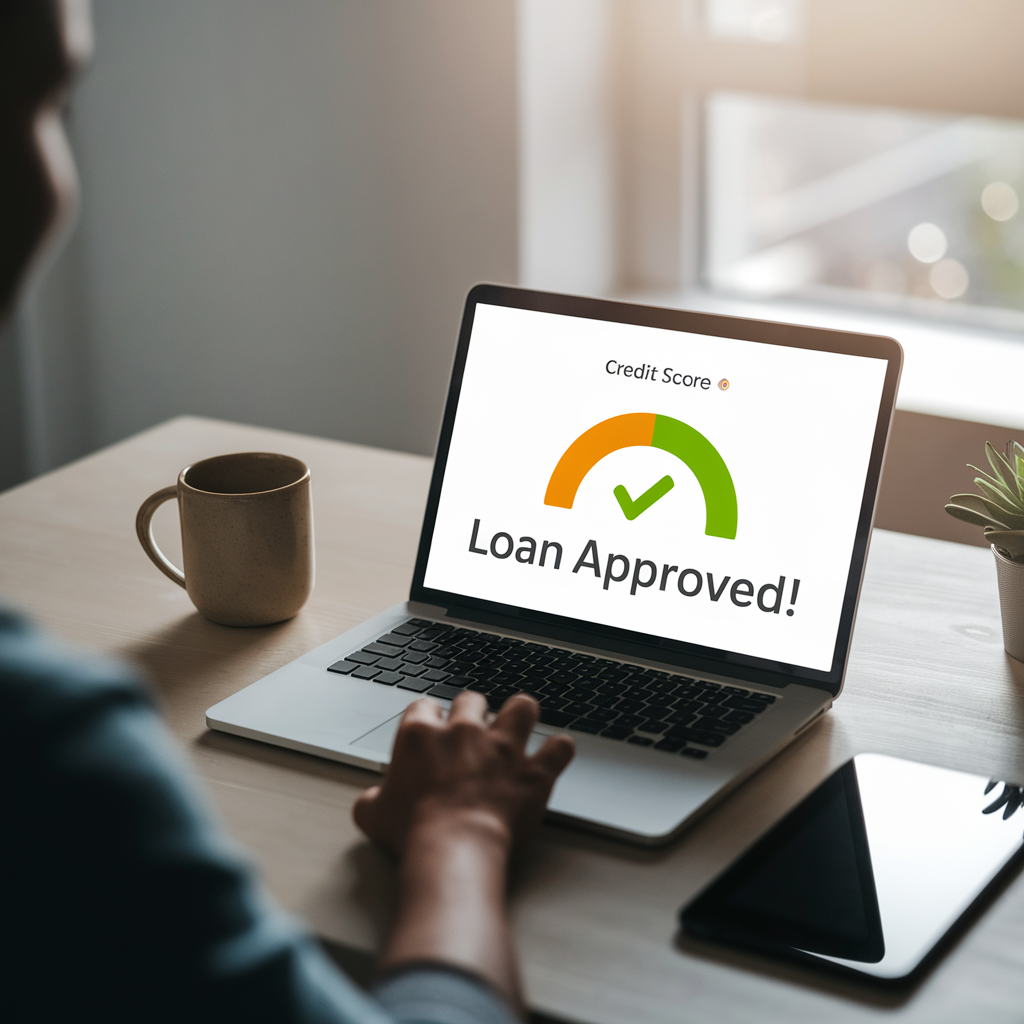
It’s real. But the way most people go about it is backwards. They assume the obstacle is their credit score — that if they could just get their number up a few points, the doors would open. That’s not actually the problem. The real obstacle is time architecture: knowing which lenders have underwriting systems that run 24 hours, which funding pipelines connect directly to your bank’s ACH network, and which institutions will actually disburse cash before 5 PM the same day you apply — not the next business day, dressed up as “same day” in the fine print. Banks don’t say no because you’re unworthy. They say no because their infrastructure was built for a different era, and their idea of “fast” is still 48 hours.

1. Understand Why Traditional Banks Fail at Speed
Walk into a branch of one of the large national banks and ask for a personal loan by end of day. The loan officer will be polite. They’ll hand you paperwork. They’ll tell you the process takes “a few business days” for review, then another one to two days for funding after approval. What they’re describing is a pipeline built around batch processing — applications reviewed in groups, decisions made during business hours, disbursements queued overnight through legacy systems.
Online lenders rebuilt that pipeline from scratch. Their underwriting is automated, running credit checks and income verification in minutes rather than days. Some of them — particularly fintech lenders that launched in the last five or six years — have direct integrations with major bank networks that allow same-day ACH transfers if you apply early enough in the day, usually before noon or 1 PM local time.
The catch no one tells you upfront: same-day funding is not the same as same-day approval. Approval might come in 11 minutes. But if you’re approved at 3:47 PM and your bank’s ACH cutoff was 2:30 PM, that money isn’t landing until tomorrow morning. This is where people get burned — they rush through an application, get excited about the approval notification, and then stare at an empty account all night. Apply early. That one habit changes everything.
2. The Three Types of Lenders Who Actually Move Fast
Not all fast-money options are the same, and collapsing them into one category is how people end up in 400% APR payday loan traps.
- Online personal loan marketplaces: These platforms send your single application to multiple lenders simultaneously and return competing offers, sometimes within two to three minutes. You’re not applying five times — one soft inquiry, multiple offers. If you have a credit score in the 580–650 range, you may still qualify for something reasonable through these channels, though the rate will reflect the risk.
- Credit unions with digital branches: Often overlooked. Many credit unions now have fully online membership and loan applications. Their rates are typically lower than fintech lenders, and some have same-day or next-morning funding for members. If you’re already a member of a credit union, call them first — not their general line, but their loan department directly. Ask specifically about same-day disbursement.
- Earned wage access platforms: If you have a job and your employer participates in a payroll integration service, you may be able to access a portion of your already-earned wages before payday — sometimes within minutes, for a flat fee of $2–$5. This is not a loan in the traditional sense, but for a $400–$800 shortfall, it may solve the problem faster and cheaper than anything else on this list.
What you want to avoid: storefront payday lenders and certain “instant cash” apps that charge subscription fees plus per-advance fees that, when annualized, exceed 200%. Industry data has consistently shown that borrowers who use payday loans to cover emergency expenses often roll those loans over multiple times, turning a $300 fix into a $600 problem within 60 days.
3. What Your Application Actually Needs to Clear Fast
Lenders who process same-day have automated systems that flag incomplete or inconsistent applications for manual review — which kills your timeline instantly. Here’s what needs to be clean before you hit submit:
- Bank account and routing number for the exact account you want funded. Sounds obvious, but people enter a savings account and then wonder why the transfer is delayed — some ACH systems treat savings and checking differently.
- Proof of income that’s recent. Most fast lenders accept a PDF of your two most recent pay stubs, or they’ll connect via a bank data aggregator that reads your deposit history. If you’re self-employed, have three months of bank statements ready as a single PDF before you start.
- Consistent address history. If your current address doesn’t match what’s on your credit report — because you moved six months ago and never updated your records — the automated system may flag it. Check your credit report for address discrepancies before applying.
- A working phone number that can receive a verification call or text. Some lenders still run a live verification step before disbursing. Miss that call and your application sits until the next business window.
4. A Real Walk-Through: What Thursday Night Actually Looked Like
Back to that car situation. Here’s what a functional version of that night looks like — imperfections included.
At 10:31 PM, after getting the mechanic’s text, the borrower in this scenario — call them Marcus — goes to an online lending marketplace and submits a $1,500 application (a little over the estimate, to cover the tow and any extras). Credit score: 611. Income: $47,000 annually from a warehouse job, paid biweekly. He gets three offers back within four minutes. The best one: $1,500 at 24.9% APR, 24-month term, monthly payment of $78. Not great. Not predatory either.
He accepts at 10:38 PM. The lender’s confirmation email says “funds typically arrive the next business day, or same day if processed before 2 PM.” It’s already past 10 PM. The money lands Friday morning at 9:14 AM — not technically same-day from application, but same-day from when business hours started. The mechanic takes a debit card payment by phone. Marcus picks up his car at noon and makes his 6:45 AM shift the next Monday with no drama.
Where it didn’t go perfectly: the first platform Marcus tried rejected him outright within 90 seconds — no explanation, just a generic “we’re unable to offer you a loan at this time.” That’s a soft inquiry, no damage. But he lost about eight minutes being frustrated before moving to the second platform. That emotional tax is real. Build in the expectation that the first attempt may not work.
5. What Doesn’t Work — And Why People Keep Trying It Anyway
Some approaches feel logical but consistently waste time or make things worse.
- Calling your bank’s customer service line after hours hoping for an exception. It won’t happen. The representative on the phone does not have the authority to expedite a loan disbursement. You’ll spend 40 minutes on hold to confirm what you already suspected. Use that time to apply somewhere that actually has the infrastructure for it.
- Applying to five different lenders simultaneously with hard inquiries each time. Multiple hard inquiries in a short window — especially from different lender types — can drop your score 15 to 25 points temporarily and make each subsequent approval harder. Use a marketplace that does a single soft pull first, then a hard pull only on the lender you choose.
- Borrowing the maximum amount you qualify for “just in case.” Larger loan amounts sometimes trigger additional verification steps — income documentation review, employer verification calls — that can push your disbursement from same-day to next-day or later. Borrow exactly what you need, or add 10% for buffer. Not 40%.
- Assuming a low credit score means you’re out of options. Scores below 580 do close some doors. But “some doors” is not “all doors.” Secured loan options, credit union relationships, and earned wage access don’t weigh your FICO the same way a traditional lender does. Know the full map before you assume you’re blocked.
6. The Rate Reality You Have to Accept
Same-day personal loans for people with imperfect credit are not cheap. APRs ranging from 18% to 36% are common in this segment. That sounds alarming until you do the actual math on a short-term need: a $1,000 loan at 29% APR over 12 months costs you roughly $161 in interest total. That’s the real number — not the percentage, which is an annualized figure that sounds scarier than it is on a small, short-term loan.
The comparison point matters. If the alternative is a $150 overdraft fee plus a $35 returned-payment fee from your landlord — which is effectively a 600%+ effective rate on a three-day shortfall — then 29% APR starts to look like the responsible choice.
The goal isn’t to love the rate. It’s to see it clearly and make a decision with accurate numbers in front of you, not panic math.
Three Things You Can Do Before Friday
You don’t have to be in crisis mode to act on this. Do these three things now, while you’re calm and not staring at a mechanic’s invoice:
Pull your free credit report today — all three bureaus are accessible through the official government-authorized site — and check for address discrepancies or accounts you don’t recognize. Fix those before you need to apply fast.
Find out if your employer offers earned wage access. Ask HR or check your payroll portal. If they do, set it up now so it’s ready. Enrollment sometimes takes a few days, and you can’t do it during a Thursday night emergency.
Bookmark one reputable online lending marketplace — not an app store find, but one you’ve looked up through credible reviews. Know where you’d go before you need to go there. That 40 minutes Marcus spent frustrated on the wrong platform? That’s the cost of not having a plan.
Same-day funding is not magic, and it’s not a trap — it’s infrastructure. Know how it works before you need it, and it becomes a tool. Find out about it at 10:23 PM with a dead car and an empty account, and it becomes a scramble. The difference between those two versions of the story is about 90 minutes of reading you do right now.